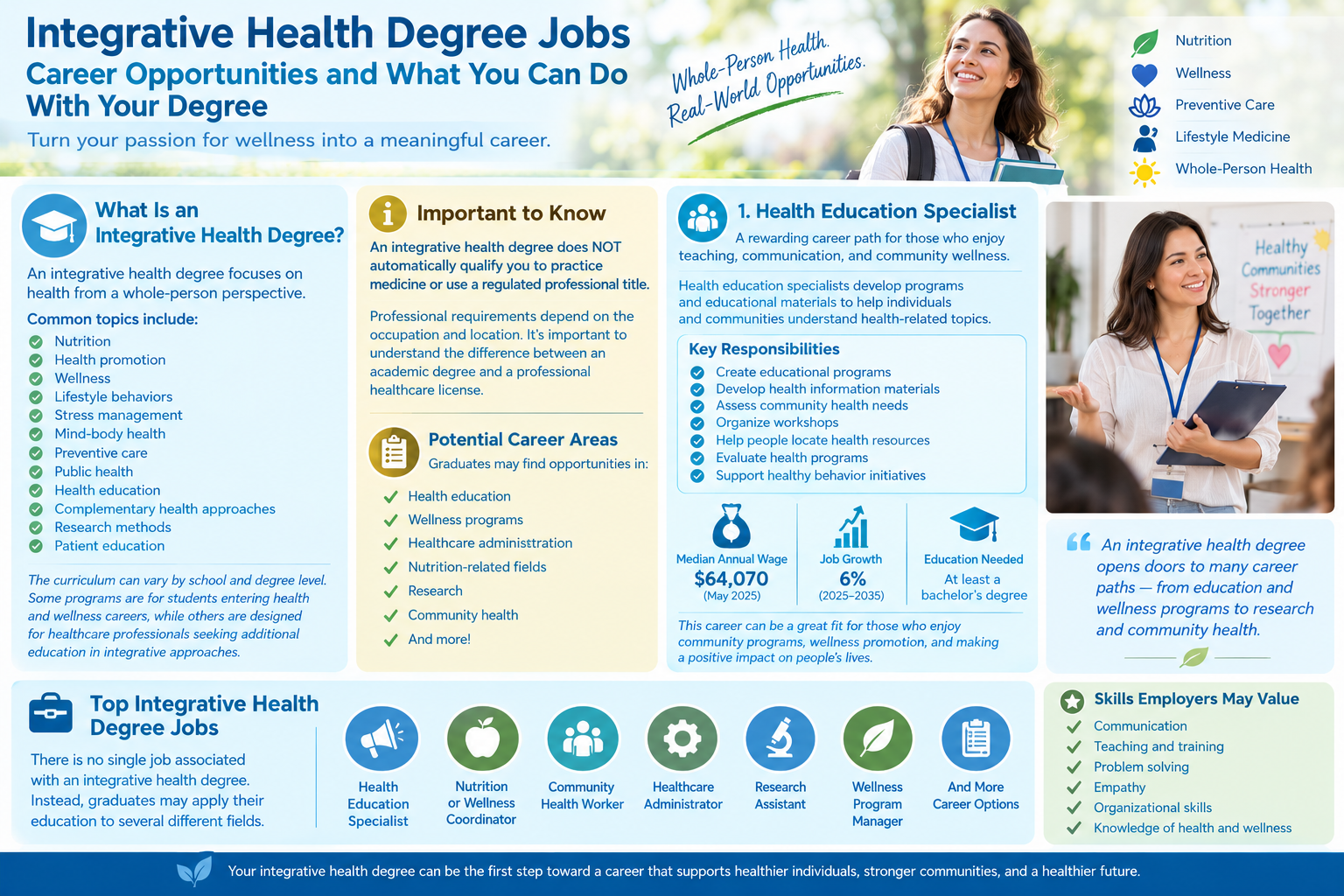
If you are interested in nutrition, wellness, preventive care, lifestyle medicine, and whole-person health, an integrative health degree can provide a foundation for a variety of career paths.
One of the most common questions students ask is: What jobs can you get with an integrative health degree?
The answer depends on the type and level of degree you earn, your previous education, professional certifications, licensing requirements, and the specific career you want to pursue.
An integrative health degree can support careers in health education, wellness programs, healthcare administration, nutrition-related fields, research, community health, and other areas. However, an integrative health degree does not automatically qualify someone to practice medicine or use a regulated professional title.
In this guide, we explore the most relevant integrative health degree jobs, potential career paths, salary considerations, skills employers may value, and how to choose an educational program.
 What Is an Integrative Health Degree?
An integrative health degree generally focuses on health from a whole-person perspective.
Depending on the school and degree level, coursework may cover topics such as:
- Nutrition
- Health promotion
- Wellness
- Lifestyle behaviors
- Stress management
- Mind-body health
- Preventive care
- Public health
- Health education
- Complementary health approaches
- Research methods
- Patient education
The curriculum can vary significantly from one institution to another.
Some programs are designed for students entering health and wellness careers, while others are intended for healthcare professionals who want additional education in integrative approaches.
It is important to understand the difference between an academic degree and a professional healthcare license. Completing an integrative health program does not automatically make someone a physician, nurse, dietitian, therapist, or other licensed healthcare professional.
Professional requirements depend on the occupation and location.
Top Integrative Health Degree Jobs
There is no single job associated with an integrative health degree. Instead, graduates may apply their education to several different fields.
Here are some of the most relevant career options.
 1. Health Education Specialist
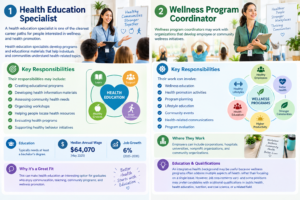
A health education specialist is one of the clearest career paths for people interested in wellness and health promotion.
Health education specialists develop programs and educational materials that help individuals and communities understand health-related topics.
Their responsibilities may include:
- Creating educational programs
- Developing health information materials
- Assessing community health needs
- Organizing workshops
- Helping people locate health resources
- Evaluating health programs
- Supporting healthy behavior initiatives
According to the U.S. Bureau of Labor Statistics, health education specialists typically need at least a bachelor’s degree. The median annual wage was $64,070 in May 2025, and employment is projected to grow 6% from 2025 to 2035.
This can make health education an interesting option for graduates who enjoy communication, teaching, community programs, and wellness promotion.
2. Wellness Program Coordinator
Wellness program coordinators may work with organizations that develop employee or community wellness initiatives.
Their work can involve:
- Wellness education
- Health promotion activities
- Program planning
- Lifestyle education
- Community events
- Health-related communications
- Program evaluation
Employers can include corporations, hospitals, universities, nonprofit organizations, and community organizations.
An integrative health background may be useful because wellness programs often address multiple aspects of health rather than focusing on a single issue.
However, job requirements vary, and some positions may prefer candidates with additional qualifications in public health, health education, nutrition, exercise science, or a related field.
3. Community Health Professional
Community health is another potential career direction.
Community-focused professionals may work with populations to improve access to health information and resources.
Depending on the position, responsibilities can include:
- Community outreach
- Health education
- Program coordination
- Public health campaigns
- Resource navigation
- Health promotion
- Data collection
An integrative health education can provide useful knowledge about lifestyle factors and health behavior.
If you are interested in community health, consider programs that include public health, health promotion, research, and community-based education.
4. Nutrition-Related Careers
Nutrition is frequently included in integrative health education.
Graduates may be interested in careers involving nutrition education, wellness, food behavior, or health promotion.
However, it is essential to distinguish between general nutrition education and regulated nutrition professions.
For example, dietitians and nutritionists typically require specific education and training. BLS lists a $76,400 median annual wage for dietitians and nutritionists in May 2025 and identifies a bachelor’s degree plus internship/residency as the typical entry-level education and training pathway.
An integrative health degree alone should not be assumed to qualify someone for professional dietetics practice.
If becoming a registered dietitian is your goal, research the specific accredited education, supervised practice, examination, and licensing requirements applicable to your location.
5. Healthcare Program Coordinator
Healthcare organizations need professionals who can coordinate health programs and services.
A graduate with an integrative health background may explore roles involving:
- Patient education
- Wellness programming
- Community outreach
- Healthcare coordination
- Program administration
- Health promotion
The exact requirements depend on the employer.
Some positions may require additional education in healthcare administration, public health, business, or another related field.
6. Healthcare Administrator
Healthcare administration can be another career direction for people who enjoy organization and management more than direct patient care.
Healthcare administrators may work with:
- Clinics
- Hospitals
- Medical practices
- Community health organizations
- Wellness organizations
- Healthcare companies
Potential responsibilities include managing programs, coordinating staff, improving processes, handling budgets, or supporting organizational operations.
BLS data show that people with healthcare and related degrees work across healthcare practitioner and technical occupations, management occupations, education, administration, and other fields.
An integrative health degree may therefore serve as part of a broader educational background for healthcare management roles, especially when combined with business or administrative experience.
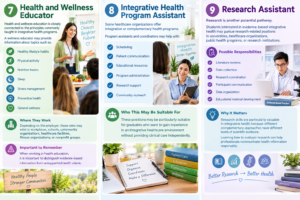 7. Health and Wellness Educator
Health and wellness education is closely connected to the principles commonly taught in integrative health programs.
A wellness educator may provide information about topics such as:
- Healthy lifestyle habits
- Physical activity
- Nutrition basics
- Sleep
- Stress management
- Preventive health
- General wellness
Depending on the employer, these roles may exist in workplaces, schools, community organizations, healthcare facilities, fitness organizations, or nonprofit groups.
When working in health education, it is important to distinguish evidence-based information from unsupported health claims.
8. Integrative Health Program Assistant
Some healthcare organizations offer integrative or complementary health programs.
Program assistants and coordinators may help with:
- Scheduling
- Patient communication
- Educational resources
- Program administration
- Research support
- Community outreach
These positions may be particularly suitable for graduates who want to gain experience in an integrative healthcare environment without providing clinical care independently.
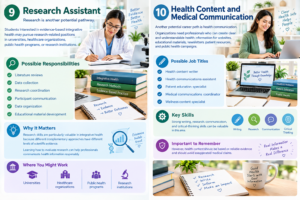 9. Research Assistant
Research is another potential pathway.
Students interested in evidence-based integrative health may pursue research-related positions in universities, healthcare organizations, public health programs, or research institutions.
Possible responsibilities include:
- Literature reviews
- Data collection
- Research coordination
- Participant communication
- Data organization
- Educational material development
Research skills are particularly valuable in integrative health because different complementary approaches have different levels of scientific evidence.
Learning how to evaluate research can help professionals communicate health information responsibly.
10. Health Content and Medical Communication
Another potential career path is health communication.
Organizations need professionals who can create clear and understandable health information for websites, educational materials, newsletters, patient resources, and public health campaigns.
Possible job titles include:
- Health content writer
- Health communications assistant
- Patient education specialist
- Medical communications coordinator
- Wellness content specialist
Strong writing, research, communication, and critical-thinking skills can be valuable in this area.
However, health content should be based on reliable evidence and should avoid exaggerated medical claims.
Integrative Health Degree Jobs and Salary Expectations
One of the most important things to understand is that there is no single salary for an integrative health degree.
Salary depends on the actual occupation.
For example, BLS reports that healthcare practitioners and technical occupations had a median annual wage of $86,530 in May 2025.
Health education specialists had a median annual wage of $64,070, while dietitians and nutritionists had a median annual wage of $76,400.
These numbers should not be interpreted as guaranteed salaries for integrative health graduates.
Your income can depend on:
- Degree level
- Professional credentials
- Experience
- Geographic location
- Employer
- Industry
- Job responsibilities
- Additional certifications
- Management responsibilities
For this reason, it is better to research salaries for the specific occupation you want rather than searching for one “integrative health salary.”
What Skills Are Valuable for Integrative Health Jobs?
An integrative health degree can help develop several skills that may be useful across different careers.
Communication
Healthcare professionals need to communicate complex information clearly.
Critical Thinking
Students should learn how to evaluate claims and distinguish reliable evidence from unsupported information.
Health Education
Understanding how people learn and change behavior can be valuable in wellness and community health roles.
Research Skills
Being able to locate, understand, and evaluate research can improve the quality of health-related work.
Interpersonal Skills
Many health and wellness positions involve working with patients, clients, colleagues, or community members.
Program Management
Planning and evaluating wellness programs can be valuable for healthcare and community organizations.
Do You Need a Master’s Degree?
Not every integrative health career requires a master’s degree.
Some health education positions typically require a bachelor’s degree, while advanced or specialized positions may require graduate-level education.
BLS indicates that health education specialists typically enter the occupation with at least a bachelor’s degree, although some positions require or prefer advanced education.
A master’s degree may be useful if your goal involves:
- Public health
- Healthcare management
- Research
- Advanced health education
- Academic work
- Specialized professional roles
Before choosing a graduate program, identify the specific job you want and research its educational requirements.
How to Choose an Integrative Health Degree
If you are researching an integrative health degree online, don’t choose a program based solely on the title.
Consider these factors:
Accreditation
Verify the institution’s accreditation and understand whether it meets your educational and professional goals.
Curriculum
Review the actual courses.
Look for subjects such as nutrition, health promotion, research methods, public health, health behavior, and evidence evaluation.
Career Outcomes
Research the types of jobs graduates pursue.
Professional Requirements
If you want a regulated profession, verify licensing and certification requirements before enrolling.
Clinical Training
If your intended career requires supervised clinical experience, confirm how the program handles those requirements.
Cost
Calculate total tuition, fees, books, technology costs, and other expenses.
Useful Resources for Integrative Health Students
Students can supplement formal education with carefully selected books and educational resources covering nutrition, wellness, lifestyle, and evidence-based health.
Choose an Amazon product that is genuinely relevant to the article, such as a reputable nutrition, wellness, or health education book.
For an additional wellness-related resource, you can include your relevant ClickBank affiliate offer:
Explore a related ClickBank resource
Affiliate products should be described accurately and should not be presented as replacements for professional healthcare, education, or treatment.
Are Integrative Health Degree Jobs in Demand?
Demand varies significantly by occupation.
The broader healthcare sector is projected to experience strong employment growth. BLS projects approximately 1.9 million openings per year on average across healthcare occupations from 2025 through 2035, including opportunities created by both employment growth and replacement needs.
Health education specialists are projected to experience 6% employment growth from 2025 to 2035, according to BLS.
This does not mean every integrative health graduate will find a job automatically.
Instead, career opportunities depend on the specific occupation, qualifications, location, experience, and employer demand.
How to Improve Your Career Opportunities
If you want to make your integrative health education more useful in the job market, consider developing skills beyond your core coursework.
Useful additions may include:
- Public health knowledge
- Research experience
- Health communication
- Data analysis
- Program management
- Nutrition education
- Professional certifications where appropriate
- Internship experience
- Volunteer experience
- Healthcare administration skills
Combining integrative health knowledge with another marketable skill can broaden your career options.
Frequently Asked Questions
What jobs can you get with an integrative health degree?
Potential careers include health education specialist, wellness program coordinator, community health professional, healthcare program coordinator, health communicator, research assistant, and healthcare administration roles.
Can you become a doctor with an integrative health degree?
An integrative health degree by itself does not qualify someone to practice as a medical doctor. Physicians follow a separate medical education and licensing pathway.
Can an integrative health degree lead to a nutrition career?
It can provide nutrition-related knowledge, but regulated nutrition professions may require specific education, supervised training, certification, and licensing.
Is an integrative health degree worth it?
It may be worthwhile if the curriculum and credentials align with your desired career. The best way to evaluate a program is to start with the job you want and work backward to determine the required education.
Can you work online with an integrative health degree?
Some careers involving health education, communication, research support, administration, and wellness programming may offer remote or hybrid opportunities. Availability depends on the employer and position.
Final Thoughts
There are many potential integrative health degree jobs, but there is no single career path or guaranteed salary associated with the degree.
Graduates may explore health education, wellness programs, community health, nutrition-related fields, healthcare administration, research, health communication, and other areas.
The most important step is to determine what type of work you want to do before choosing a degree.
If your goal is a regulated healthcare profession, carefully research the required degree, accreditation, clinical training, certification, and licensing requirements.
If your goal is health education or wellness, look for programs that provide strong foundations in communication, research, nutrition, health promotion, and evidence evaluation.
Ultimately, an integrative health degree can be most valuable when it is connected to a clear career plan and supported by practical skills and appropriate professional credentials.
Medical and Educational Disclaimer
This article is for general educational purposes only and does not constitute medical, professional, legal, financial, or career advice. Educational, certification, and licensing requirements vary by profession and location. Always verify current requirements with the relevant educational institution, licensing authority, accreditation organization, or professional association.
Affiliate Disclosure
This article may contain affiliate links. If you purchase a product or service through an affiliate link, this website may receive a commission at no additional cost to you. Affiliate recommendations are provided for informational purposes and do not constitute medical endorsement or a guarantee of effectiveness.