
When seeking medical care for chronic symptoms, fatigue, or preventative health, many patients turn to holistic practices. However, with so many titles in the wellness industry—from health coaches to naturopaths—it can be challenging to know if your provider has legitimate, rigorous medical training.
Understanding what an Integrative Medicine certification is, how providers earn it, and why it matters can help you choose a practitioner who offers safe, science-backed, and personalized care.
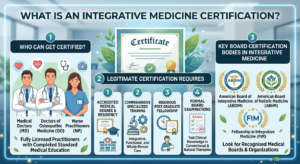 What Is an Integrative Medicine Certification?
An Integrative Medicine certification is an advanced professional credential awarded to fully licensed medical practitioners—such as Medical Doctors (MDs), Doctors of Osteopathic Medicine (DOs), and Nurse Practitioners (NPs)—who have completed comprehensive, specialized training beyond their standard medical education.
Unlike general alternative medicine credentials, a legitimate certification in integrative medicine requires:
-
Completion of accredited medical degrees and residency programs.
-
Rigorous post-graduate fellowship or specialized academic training in integrative, functional, and whole-person care.
-
Passing formal board examinations that test clinical knowledge in both conventional Western medicine and evidence-based natural therapies.
Key Board Certification Bodies in Integrative Medicine
When evaluating a practitioner’s credentials, look for certifications awarded by recognized medical boards and organizations, such as:
1. American Board of Integrative Medicine (ABIM)
Operated under the American Board of Physician Specialties (ABPS), the ABIM offers formal board certification for physicians who have completed fellowship training or extensive clinical practice in integrative care and passed a rigorous national exam.
2. Fellowship in Integrative Medicine (FAIHM or ABOIM)
Offered by leading academic institutions—such as the University of Arizona Center for Integrative Medicine—these intensive 1,000+ hour fellowships train physicians in functional nutrition, botanical medicine, mind-body therapies, and lifestyle medicine.
3. Institute for Functional Medicine Certified Practitioner (IFMCP)
While focused specifically on functional medicine, this gold-standard credential requires healthcare professionals to complete advanced training modules and pass a comprehensive exam on root-cause diagnostics and systems biology.
Why Provider Certification Matters for Patients
Choosing a practitioner with a recognized Integrative Medicine certification ensures that your health is managed with the highest standards of safety, scientific rigor, and clinical excellence.
| Aspect | Uncertified Wellness Practitioner | Certified Integrative Physician |
| Medical Background | Variable; may lack clinical licenses | Fully licensed MD, DO, or NP |
| Diagnostic Capabilities | Cannot order or interpret medical labs | Orders and interprets advanced conventional & functional labs |
| Prescription Authority | None | Can manage, adjust, or prescribe medications safely |
| Safety Standard | Minimal regulatory oversight | Bound by medical board ethics and evidence-based safety standards |
🛒 Amazon Essential: To help your provider track your cardiovascular and metabolic trends accurately between clinical visits, use a medical-grade [Omron Upper Arm Blood Pressure Monitor on Amazon] to record your daily vitals at home.
What Certified Integrative Medicine Doctors Do
A provider holding an Integrative Medicine certification bridges the gap between conventional treatments and evidence-based natural modalities:
-
Conduct Advanced Root-Cause Testing: They utilize diagnostic blood panels, gut microbiome analysis, hormone tracking, and metabolic evaluations to uncover underlying health triggers.
-
Design Evidence-Based Plans: They combine conventional therapies (when necessary) with targeted clinical nutrition, botanical medicine, stress reduction strategies, and lifestyle counseling.
-
Prevent Harmful Interactions: Because certified providers understand both pharmacology and natural supplements, they ensure your therapies do not cause negative interactions.
-
Partner with Your Healthcare Team: They collaborate seamlessly with your primary care doctor, oncologists, or cardiologists to provide coordinated care.
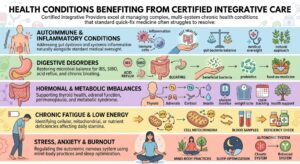
Health Conditions Benefiting from Certified Integrative Care Certified integrative providers excel at managing complex, multi-system chronic health conditions that standard quick-fix medicine often struggles to resolve:
-
Autoimmune & Inflammatory Conditions: Addressing gut dysbiosis and systemic inflammation naturally alongside standard medical oversight.
-
Digestive Disorders: Restoring microbial balance for IBS, SIBO, acid reflux, and chronic bloating.
💡 Recommended Product (ClickBank): Restoring microbial balance is key to overcoming chronic digestive issues. Discover [Synogut / LeanBiome Gut Health Protocol on ClickBank] to support smooth digestion and maintain a balanced gut microbiome.
Experience Certified, Whole-Person Care at Holistic Family Med
Knowing the value of an Integrative Medicine certification allows you to make informed, confident choices about your healthcare team. When you choose a certified provider, you receive the safety of conventional medical expertise paired with the transformative power of whole-person healing.
At Holistic Family Med, our compassionate team is dedicated to providing high-quality, evidence-based integrative care. We take the time to listen to your story, conduct thorough evaluations, and design personalized treatment plans tailored to your long-term goals.
Ready to partner with a trusted, credentialed integrative team? Visit Holistic Family Med today to schedule your comprehensive consultation and take the first step toward optimal wellness!