
Healthcare is not only about treating symptoms. It is also about understanding the factors that influence overall well-being, including nutrition, physical activity, sleep, stress, lifestyle, and preventive care. Holistic family medicine takes a whole-person approach by considering these factors alongside conventional medical care.
Rather than focusing on one symptom or condition in isolation, holistic family medicine aims to understand the individual as a whole. This approach can help people become more involved in their health and develop sustainable habits that support long-term wellness.
 What Is Holistic Family Medicine?
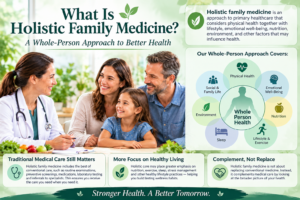
Holistic family medicine is an approach to primary healthcare that considers physical health together with lifestyle, emotional well-being, nutrition, environment, and other factors that may influence health.
Traditional medical care remains an important part of this approach. Depending on a person’s needs, healthcare may include routine examinations, preventive screenings, medications, laboratory testing, and referrals to specialists.
Holistic care may also place greater emphasis on nutrition, exercise, sleep, stress management, and other healthy lifestyle practices.
The goal is not necessarily to replace conventional medicine. Instead, holistic family medicine can complement appropriate medical care by looking at the broader picture of a person’s health.
How Does a Holistic Approach Differ?
One of the main differences is the emphasis on the whole person.
For example, someone experiencing fatigue may have many possible contributing factors. A healthcare professional may consider sleep habits, nutrition, physical activity, medications, stress, medical history, and other relevant factors rather than assuming there is only one explanation.
This broader perspective can encourage a more personalized healthcare plan.
Holistic family medicine may consider several areas, including:
- Physical health
- Nutrition and dietary habits
- Sleep quality
- Physical activity
- Stress management
- Preventive healthcare
- Family and medical history
- Mental and emotional well-being
- Lifestyle habits
- Environmental factors
 The Role of Nutrition in Holistic Healthcare
Nutrition is an important part of overall health. A balanced eating pattern can provide the nutrients the body needs while supporting healthy energy levels and general wellness.
A holistic healthcare approach may discuss food choices, meal patterns, hydration, and individual nutritional needs.
However, nutritional recommendations should be personalized. People with conditions such as diabetes, kidney disease, food allergies, or other medical concerns may require specific dietary guidance from a qualified healthcare professional.
Instead of following every popular diet trend, it is generally better to focus on sustainable eating habits that fit an individual’s health needs and lifestyle.
Lifestyle and Preventive Care
Prevention is another important component of holistic family medicine.
Regular physical activity, adequate sleep, stress management, healthy nutrition, and appropriate medical screenings can all play a role in maintaining overall health.
Preventive care may include routine checkups, recommended screenings, vaccinations, blood pressure monitoring, and discussions about lifestyle risks.
These measures can help identify potential health concerns early and give individuals an opportunity to discuss appropriate next steps with their healthcare provider.
 Stress, Sleep, and Overall Wellness
Modern lifestyles can make it difficult to maintain healthy sleep and stress-management habits. However, these areas are closely connected with general well-being.
A holistic approach may encourage practical habits such as maintaining a consistent sleep schedule, engaging in regular physical activity, spending time outdoors, practicing relaxation techniques, and maintaining social connections.
These strategies are not substitutes for professional treatment when someone has a medical or mental health condition. Instead, they can be considered part of a broader healthy lifestyle.
Is Holistic Family Medicine Right for Everyone?
Holistic family medicine can be appealing to people who want their healthcare to consider more than individual symptoms. However, healthcare decisions should always be based on a person’s specific circumstances.
People with ongoing symptoms or diagnosed medical conditions should work with an appropriately qualified healthcare professional. Some conditions require medications, diagnostic testing, specialist care, or other conventional treatments.
Natural or lifestyle-based approaches should not automatically be considered safer or more effective simply because they are described as “natural.” Some supplements and herbal products can interact with medications or cause unwanted effects.
For this reason, it is important to discuss supplements, dietary changes, and complementary therapies with a healthcare professional when appropriate.
Building a Personalized Approach to Health
One of the most useful ideas behind holistic family medicine is personalization. There is no single diet, exercise program, or wellness strategy that works perfectly for everyone.
A personalized approach can begin with understanding an individual’s health history, current lifestyle, goals, risk factors, and preferences.
From there, healthcare professionals and patients can work together to develop realistic goals.
These goals might include improving nutrition, becoming more physically active, establishing better sleep habits, managing stress, maintaining a healthy weight, or keeping up with preventive screenings.
Final Thoughts
Holistic family medicine offers a whole-person perspective on healthcare by combining appropriate medical care with attention to nutrition, lifestyle, prevention, sleep, stress, and overall wellness.
The approach recognizes that health is influenced by many interconnected factors. By focusing on sustainable habits and individualized care, people can become more informed and active participants in their healthcare.
Most importantly, holistic health should work alongside evidence-based medical care rather than replacing necessary diagnosis or treatment. If you have a persistent symptom or medical condition, speak with a qualified healthcare professional before making significant changes to your treatment, diet, or supplement routine.