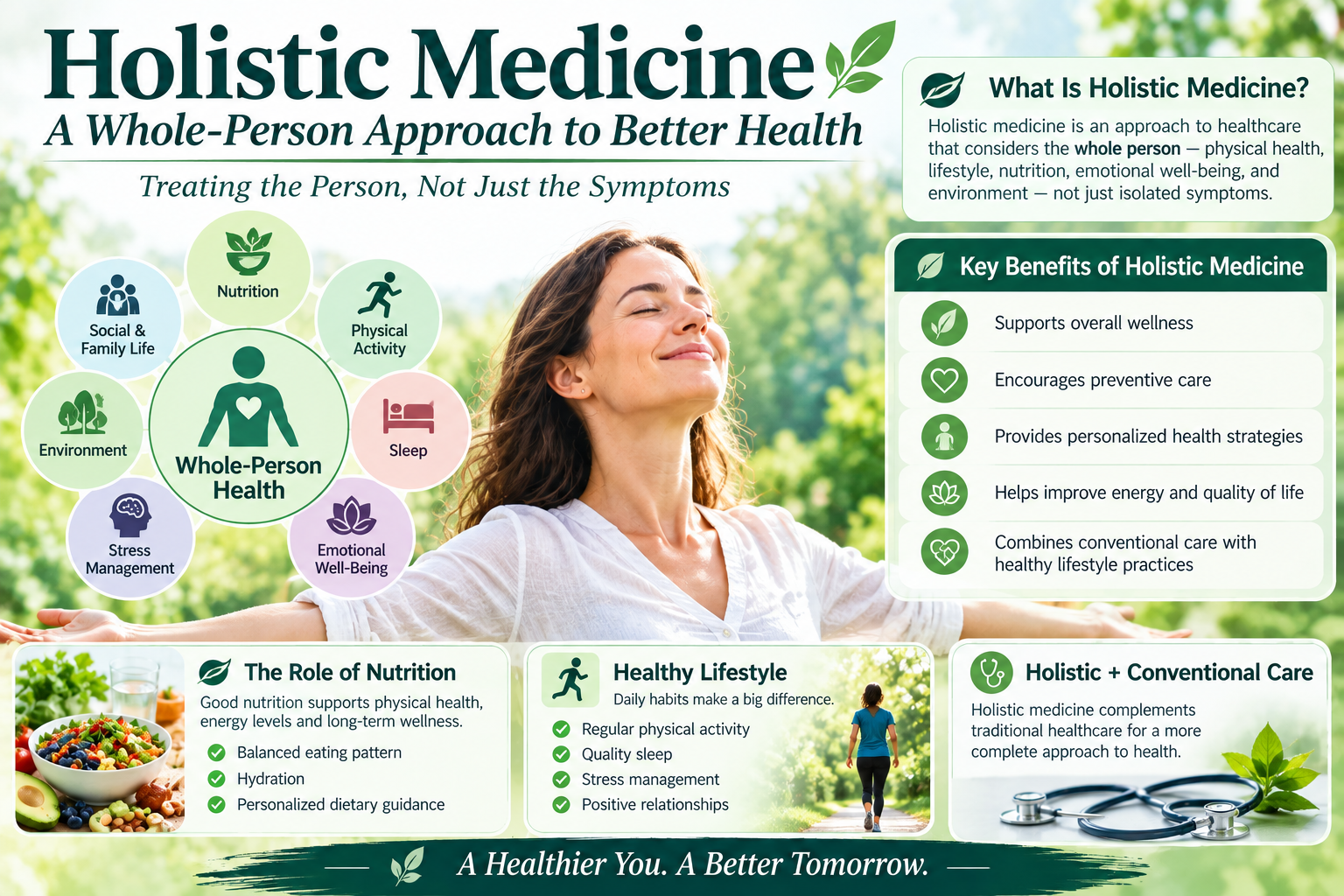
Modern healthcare offers many effective ways to diagnose, manage, and prevent health problems. At the same time, many people are interested in approaches that look beyond individual symptoms and consider the broader factors that influence well-being. Holistic medicine takes a whole-person approach by considering physical health along with lifestyle, nutrition, sleep, stress, environment, and emotional well-being.
Rather than focusing exclusively on one symptom, holistic medicine considers how different aspects of a person’s life may interact with overall health. When appropriate, holistic approaches can be incorporated alongside conventional medical care.
 What Is Holistic Medicine?
Holistic medicine is an approach to healthcare that considers the person as a whole rather than focusing only on a specific disease or symptom.
A holistic approach may consider several areas of health, including:
- Physical health
- Nutrition and eating habits
- Physical activity
- Sleep
- Stress management
- Emotional well-being
- Family and medical history
- Social relationships
- Environmental factors
The specific approach can vary depending on the healthcare professional, the patient’s needs, and the type of care being provided.
Importantly, holistic medicine does not necessarily mean avoiding conventional healthcare. Routine medical examinations, diagnostic testing, medications, vaccinations, and specialist care can remain important parts of comprehensive healthcare.
 How Does Holistic Medicine Work?
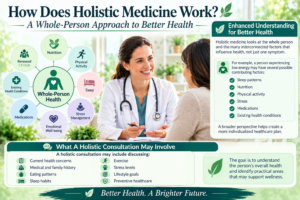
One of the central ideas behind holistic medicine is that health can be influenced by many interconnected factors.
For example, a person experiencing low energy may have several possible contributing factors. A healthcare professional might consider sleep patterns, nutrition, physical activity, stress, medications, and existing health conditions when evaluating the situation.
This broader perspective can help create a more individualized healthcare plan.
A holistic consultation may involve discussing:
- Current health concerns
- Medical and family history
- Eating patterns
- Sleep habits
- Exercise
- Stress levels
- Lifestyle goals
- Preventive healthcare
The goal is to understand the person’s overall health and identify practical areas that may support wellness.
The Role of Nutrition in Holistic Medicine
Nutrition is an important part of overall health. A balanced eating pattern can provide essential nutrients while supporting energy, normal body functions, and general well-being.
Holistic healthcare may place additional emphasis on food quality, meal patterns, hydration, and individual nutritional needs.
However, there is no single diet that is appropriate for everyone. People with conditions such as diabetes, kidney disease, food allergies, or other medical concerns may require personalized nutritional guidance.
Instead of following every popular diet trend, sustainable eating habits that fit an individual’s health needs and lifestyle are generally more practical.
 Lifestyle and Holistic Health
Lifestyle habits can have an important role in maintaining overall wellness.
A holistic approach may encourage healthy habits such as regular physical activity, adequate sleep, balanced nutrition, stress management, and maintaining social connections.
For example, establishing a consistent sleep schedule and incorporating enjoyable physical activities into daily life may be more sustainable than making extreme lifestyle changes.
Small, realistic improvements can become long-term habits when they fit naturally into a person’s routine.
Stress Management and Emotional Well-Being
Health is not limited to physical factors. Stress and emotional well-being can also influence how people feel and function in everyday life.
Holistic medicine may therefore include discussions about stress management and healthy coping strategies.
Depending on individual preferences, these may include relaxation exercises, mindfulness practices, spending time outdoors, maintaining supportive relationships, or participating in enjoyable activities.
People experiencing persistent emotional or psychological difficulties should seek appropriate professional support rather than relying solely on lifestyle strategies.
Holistic Medicine and Conventional Healthcare
A common misconception is that holistic medicine must replace conventional medical treatment. That is not necessarily the case.
A comprehensive approach can combine appropriate conventional healthcare with healthy lifestyle practices and complementary approaches when suitable.
For example, a person may continue regular medical appointments and prescribed treatment while also working on nutrition, physical activity, sleep, and stress management.
Patients should always discuss supplements, herbs, or complementary therapies with their healthcare professional because some products can interact with medications or may not be appropriate for certain medical conditions.
Benefits of a Whole-Person Approach
A whole-person approach can encourage people to become more actively involved in their health.
Potential benefits may include:
- Greater awareness of lifestyle habits
- More personalized health goals
- Increased focus on prevention
- Better understanding of nutrition and wellness
- Greater attention to sleep and stress
- Improved communication between patients and healthcare professionals
These benefits depend on the individual and should be considered as part of a broader healthcare plan.
How to Get Started With Holistic Health
People interested in holistic health can start with simple, sustainable steps.
Consider reviewing your current eating habits, sleep schedule, physical activity, stress levels, and preventive healthcare needs. Instead of changing everything at once, choose one or two realistic goals.
It can also be helpful to discuss your health goals with a qualified healthcare professional, particularly if you have an existing medical condition or take prescription medications.
Final Thoughts
Holistic medicine provides a whole-person perspective that considers physical health, nutrition, lifestyle, sleep, stress, emotional well-being, and other factors that may influence overall wellness.
The approach does not have to compete with conventional healthcare. When used appropriately, healthy lifestyle practices and complementary approaches can work alongside evidence-based medical care.
The most effective approach is one that is personalized, sustainable, and appropriate for an individual’s health needs. If you have a medical condition or persistent symptoms, consult a qualified healthcare professional before changing your treatment, diet, or supplement routine.