
If you have been searching for a holistic, root-cause approach to your health, you may have come across the letters IFMCP next to a healthcare practitioner’s name. In the rapidly evolving landscape of integrative medicine, credentials can often feel confusing and overwhelming.
Understanding the IFMCP meaning—which stands for Institute for Functional Medicine Certified Practitioner—is essential when seeking high-quality, evidence-based functional healthcare.
In this comprehensive guide, we will unpack the exact meaning of IFMCP, explore the rigorous training behind this gold-standard credential, and explain why choosing an IFMCP-certified doctor—along with using the right daily functional health tools—can transform your journey toward optimal vitality.
 What Is the IFMCP Meaning?
IFMCP is an acronym that stands for Institute for Functional Medicine Certified Practitioner. It is the highest level of certification awarded by The Institute for Functional Medicine (IFM)—the global leader and standard-setting organization in functional medicine education.
IFMCP = Institute for Functional Medicine Certified Practitioner
└─ Standard-setting certification for root-cause, patient-centered healthcare providers.
When a healthcare provider has “IFMCP” attached to their credentials, it indicates that they have completed an extensive, rigorous educational program and passed advanced examinations focused on diagnosing and treating the root causes of chronic illness, rather than simply suppressing symptoms with medication.
What Is Functional Medicine?
To fully appreciate the IFMCP meaning, it is helpful to understand the principles of functional medicine itself. Unlike conventional medicine, which often focuses on acute care and organ-specific disease management, functional medicine is a biology-based, patient-centered approach that views the body as an interconnected system.
-
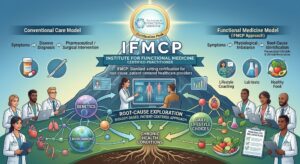
Conventional Care Model:
Symptoms ➔ Disease Diagnosis ➔ Pharmaceutical / Surgical Intervention -
Functional Medicine Model (IFMCP Approach):
Symptoms ➔ Physiological Imbalance ➔ Root-Cause Identification ➔ Personalized Lifestyle & Clinical Restoration
Functional medicine practitioners examine the complex interactions between a patient’s genetics, environment, and daily lifestyle choices to address chronic health conditions at their core.
 4 Essential Functional Medicine Pillars & Recommended Products
IFMCP practitioners evaluate six main biological systems. Below are key areas where targeted functional supplements and tools can help support your body while you work with a certified provider.
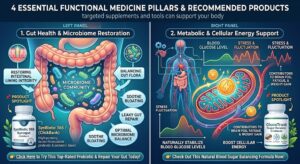
1. Gut Health & Microbiome Restoration
In functional medicine, “all disease begins in the gut.” Restoring intestinal lining integrity and balancing gut flora is the first step toward reducing systemic inflammation.
📌 Product Spotlight: SynBiotic 365 / Synogut (ClickBank) — A high-potency, doctor-formulated probiotic and prebiotic blend designed to soothe bloating, support leaky gut repair, and restore optimal microbiome balance.
👉 Click Here to Try This Top-Rated Probiotic & Repair Your Gut Today!
2. Metabolic & Cellular Energy Support
Fluctuations in blood sugar level and mitochondrial stress are major contributors to brain fog, fatigue, and weight gain.
📌 Product Spotlight: GlucoTrust / Sugar Balance (ClickBank) — An all-natural dietary supplement containing chromium, cinnamon, and bio-available botanicals that naturally stabilize blood glucose levels and boost cellular energy.
3. Anti-Inflammatory Essential Fatty Acids
IFMCP doctors consistently emphasize the importance of high-grade Omega-3 fatty acids to combat neuroinflammation and support cellular membrane liquidity.
📌 Product Spotlight: Nordic Naturals Ultimate Omega (Amazon) — IFOS 5-star certified, doctor-recommended fish oil delivering ultra-pure EPA & DHA without fishy burps.
👉 Buy Nordic Naturals Ultimate Omega on Amazon for Daily Anti-Inflammatory Support!
 4. Foundational Reading for Root-Cause Healing
Educating yourself on functional medicine principles helps you become an active partner in your healing process.
📌 Product Spotlight: “The Disease Delusion” by Dr. Jeffrey S. Bland (Amazon) — Written by the “Father of Functional Medicine,” this book explains step-by-step how to identify and fix root causes of chronic illness.
The Rigorous Pathway to Achieving IFMCP Certification
Becoming an IFMCP is no simple task. The Institute for Functional Medicine sets exceptionally high standards, requiring practitioners to invest hundreds of hours in specialized training.
Basic Medical/Healthcare License
       │
       ▼
Applying Functional Medicine in Clinical Practice (AFMCP)
       │
       ▼
6 Advanced Practice Modules (APMs)
  • Gastrointestinal  • Cardiometabolic  • Detoxification
  • Bioenergetics     • Endocrine        • Immune / Autoimmune
       │
       ▼
Comprehensive Case Study Submission & Written Board Examination
       │
       ▼
IFMCP Designation Achieved
-
Prerequisite Healthcare Licensure: Candidates must hold a valid primary medical license (MD, DO, ND, DC, NP, PA, or RD).
-
AFMCP (Applying Functional Medicine in Clinical Practice): Intensive foundational course covering clinical frameworks and matrix mapping.
-
Six Advanced Practice Modules (APMs): Deep clinical modules covering Gastrointestinal, Cardiometabolic, Detoxification, Bioenergetics, Endocrine, and Immune systems.
-
Written Board Exam and Case Study: Submission of an extensive real-world patient case study and passing a comprehensive board examination.
Why Choosing an IFMCP-Certified Practitioner Matters
Not all functional medicine providers hold the same level of training. Seeing an IFMCP provides distinct advantages for your health safety and outcomes:
| Quality Standard | Non-Certified Provider | IFMCP Certified Practitioner |
| Training Standard | Unverified or self-taught courses | Standardized, peer-reviewed curriculum |
| Biological Systems Mastery | Variable | Tested across all 6 core biological modules |
| Case Review Requirement | None required | Mandatory clinical case review submission |
| Board Examination | None | Comprehensive standardized testing |
| Continued Education | Not enforced | Mandatory recertification every 6 years |
Common Conditions Treated by IFMCP Providers
Because functional medicine focuses on underlying physiological imbalances rather than specific disease labels, IFMCP practitioners manage a wide array of complex conditions:
-
Autoimmune Disorders: Hashimoto’s thyroiditis, rheumatoid arthritis, lupus, psoriasis, and celiac disease.
-
Gastrointestinal Issues: Irritable Bowel Syndrome (IBS), SIBO, leaky gut, and chronic acid reflux.
-
Hormonal & Metabolic Imbalances: PCOS, adrenal fatigue, thyroid dysfunction, and type 2 diabetes.
-
Chronic Fatigue & Pain: Fibromyalgia, ME/CFS, and persistent systemic inflammation.
-
Neurological Issues: Brain fog, anxiety, and neuroinflammation.
 At-Home Health Monitoring: Taking Action Between Doctor Visits
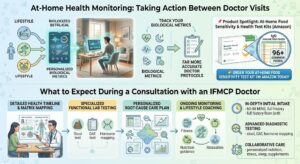
Tracking your biological metrics allows your IFMCP doctor to design a far more accurate protocol tailored to your unique biochemistry.
📌 Product Spotlight: At-Home Food Sensitivity & Health Test Kits (Amazon) — Convenient home testing kits (like Everlywell or Dutch Test alternatives) that analyze IgG immune responses to 96+ common foods.
👉 Order Your At-Home Food Sensitivity Test Kit on Amazon Today!
What to Expect During a Consultation with an IFMCP Doctor
Detailed Health Timeline & Matrix Mapping
                 │
                 ▼
Specialized Functional Lab Testing
                 │
                 ▼
Personalized Root-Cause Care Plan
                 │
                 ▼
Ongoing Monitoring & Lifestyle Coaching
-
In-Depth Initial Intake: Your first visit typically lasts 60 to 90 minutes, going through your full health history from birth to present.
-
Advanced Diagnostic Testing: Stool analysis, organic acid tests (OAT), and hormone mapping.
-
Collaborative Care: Personalized nutrition, stress management, sleep optimization, and clinical supplementation.
Frequently Asked Questions About IFMCP Meaning
1. Is an IFMCP a real medical doctor?
Yes, many IFMCPs are Medical Doctors (MDs) or Doctors of Osteopathic Medicine (DOs). However, the certification is also earned by licensed Naturopathic Doctors (NDs), Nurse Practitioners (NPs), Chiropractors (DCs), and Registered Dietitians (RDs).
2. How is an IFMCP different from a traditional functional medicine doctor?
While any provider can call themselves a “functional medicine doctor,” an IFMCP has successfully completed the formal, standardized credentialing program through the Institute for Functional Medicine, including passing a board exam and clinical case review.
3. How often do IFMCP practitioners need to recertify?
To maintain their credential and stay updated on evolving research, IFMCP practitioners must complete recertification requirements every six years.
Take Control of Your Health with Certified Functional Care
Understanding the IFMCP meaning empowers you to make informed decisions about your family’s healthcare. By partnering with a practitioner who holds this respected credential and supporting your daily health with proven, high-quality solutions, you pave the way to lasting wellness.
Ready to Start Your Root-Cause Healing Journey?
🌿 Support Your Gut Microbiome Naturally:
👉 Click Here to Discover Our Recommended Gut Restoration Protocol on ClickBank!
📚 Explore Top-Rated Functional Medicine Tools & Books:
👉 Visit Our Handpicked Health & Wellness Storefront on Amazon!
Visit Holistic Family Medicine today to discover expert resources, educational articles, and integrative health solutions tailored for your whole family.
1 thought on “IFMCP Meaning: What Does It Stand For and Why It Matters for Your Health”