
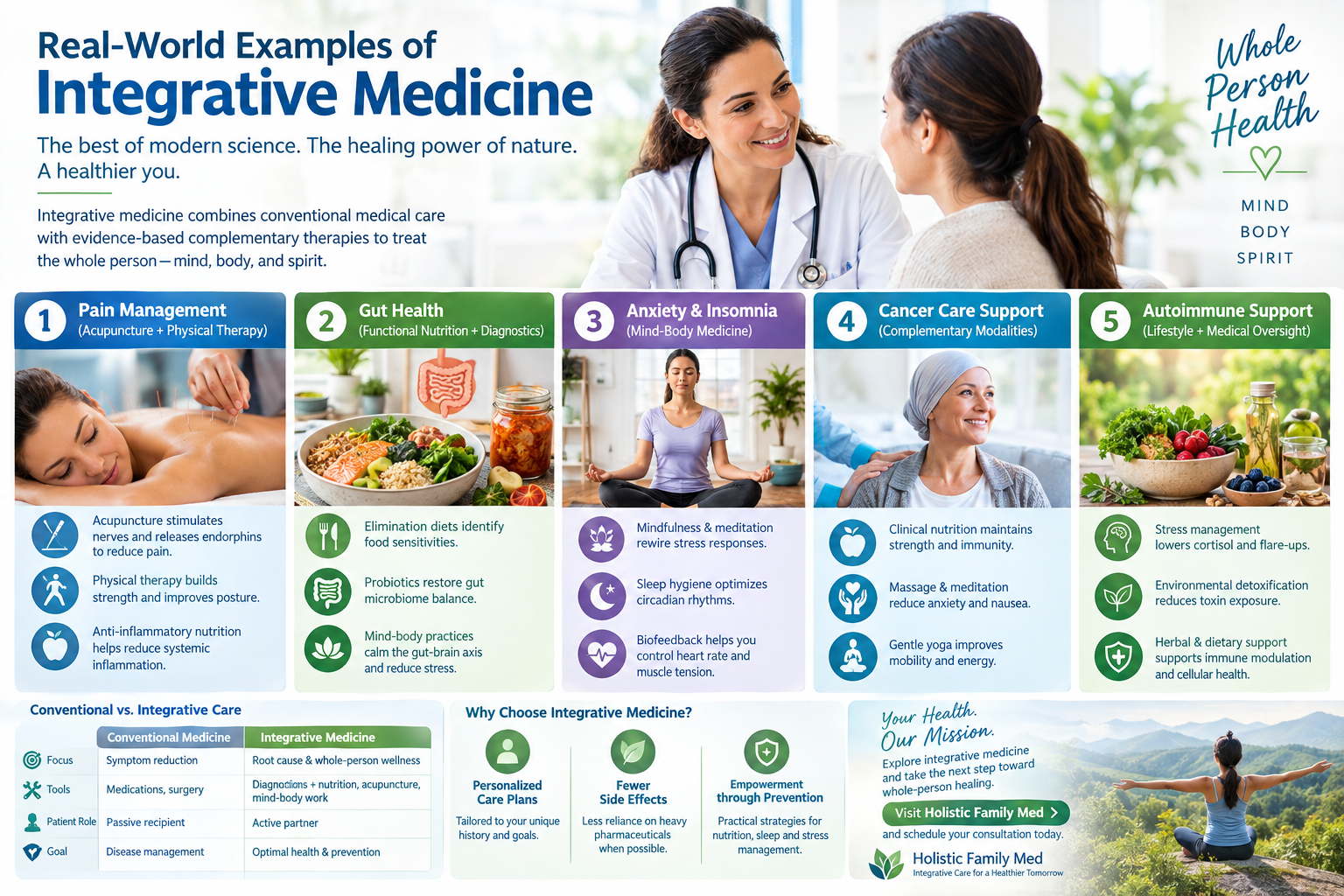
Healthcare is changing rapidly. More patients today are looking beyond quick fixes and prescription drugs to find long-term solutions for chronic fatigue, pain, stress, and gut issues. This search often leads to integrative medicine—a comprehensive model that blends modern Western medical science with evidence-based complementary therapies.
If you are curious about how this approach works in practice, examining real-world integrative medicine examples can show you how customized care addresses root causes rather than just masking symptoms.
 What Is Integrative Medicine?
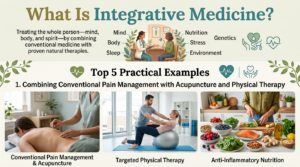
Before diving into specific integrative medicine examples, it helps to understand the core foundation. Integrative medicine treats the whole person—mind, body, and spirit. Instead of viewing health conditions in isolation, integrative practitioners explore how sleep, nutrition, stress levels, environment, and genetics interact.
Importantly, integrative medicine does not replace conventional medicine; it enhances it by safely pairing proven natural therapies with conventional treatments.
Top 5 Practical Integrative Medicine Examples
Here are five key integrative medicine examples showing how different modalities combine to restore health and balance:
1. Combining Conventional Pain Management with Acupuncture and Physical Therapy
For chronic back pain or joint inflammation, conventional care often defaults to pain medications or surgery. An integrative plan combines low-risk medical evaluations with:
-
Acupuncture: Stimulates nerves and releases natural endorphins to reduce pain signals.
-
Targeted Physical Therapy: Strengthens core stability and corrects movement posture.
-
Self-Care Tools: High-quality posture correctors and acupressure mats on Amazon can be excellent daily aids for home relief. Anti-Inflammatory Nutrition: Eliminates dietary triggers that worsen systemic inflammation. You can explore natural pain-relief and joint-health guides on ClickBank, which offer actionable meal plans and herbal recipes to tackle systemic inflammation.
-
Supplements: Consider joint Support Supplements (Amazon) like turmeric curcumin and Omega-3 fish oils to soothe chronic inflammation naturally.
-
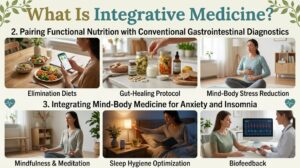 2. Pairing Functional Nutrition with Conventional Gastrointestinal Diagnostics
Digestive disorders like Irritable Bowel Syndrome (IBS), bloating, and acid reflux are among the clearest integrative medicine examples. A practitioner might use standard lab work alongside:
-
Elimination Diets: Identifying personal food sensitivities.
-
Digital Resource: Check out digestive health & functional nutrition guides on ClickBank for structured, step-by-step digital protocols on gut healing. Probiotic & Gut-Healing Protocol: Restoring gut microbiome balance with targeted supplementation.
-
Supplements: Support your gut daily with highly rated soil-based probiotics & L-Glutamine (Amazon) to reinforce your intestinal lining. Mind-Body Stress Reduction: Utilizing breathwork to calm the gut-brain axis, as stress directly affects digestion.
-
3. Integrating Mind-Body Medicine for Anxiety and Insomnia
Instead of relying solely on anti-anxiety medications or sleep aids, an integrative model builds long-term resilience through:
-
Mindfulness & Meditation: Rewiring the brain’s response to stress triggers. You can look into meditation training and anxiety-reduction courses on ClickBank to follow guided, step-by-step daily mental exercises. Sleep Hygiene Optimization: Adjusting circadian rhythms using light exposure, diet timing, and magnesium supplementation.
-
Essentials: Improve your rest with natural magnesium supplements & sleep masks on Amazon alongside light-blocking solutions for a restorative night. Biofeedback: Teaching patients how to control heart rate variability and muscle tension conscious control.
-
 4. Supporting Cancer Care with Complementary Modalities
In oncology, integrative medicine works alongside chemotherapy, radiation, or surgery to manage side effects and maintain quality of life:
-
Clinical Nutrition: Ensuring adequate nutrient intake during treatment.
-
Oncology Massage & Meditation: Reducing procedural anxiety, nausea, and neuropathy.
-
Gentle Yoga: Maintaining mobility and boosting energy levels during recovery.
5. Managing Autoimmune Disorders through Lifestyle and Medical Oversight
Autoimmune conditions require careful monitoring. An integrative approach pairs routine lab tracking with foundational lifestyle shifts:
-
Stress Management: Reducing cortisol surges that trigger immune flare-ups. Access comprehensive stress-reduction programs on ClickBank to learn lifestyle techniques that regulate immune responses. Environmental Detoxification: Minimizing exposure to endocrine disruptors and toxins.
-
Household Wellness: Swap out everyday toxins with natural home cleaning & personal care products on Amazon to reduce your environmental load. Customized Herbal & Dietary Support: Supporting immune modulation and cellular health naturally.
-
Comparing Conventional vs. Integrative Healthcare
To see how these integrative medicine examples stand out, consider how care models differ:
| Aspect | Conventional Medicine | Integrative Medicine |
| Primary Focus | Symptom reduction and acute disease care | Root cause discovery and whole-person wellness |
| Treatment Tools | Medications, surgery, standard procedures | Diagnostics + nutrition, acupuncture, mind-body work |
| Patient Role | Passive recipient of care | Active partner in health decisions |
| Goal | Disease management | Optimal health and disease prevention |
Why Choose an Integrative Approach?
These integrative medicine examples illustrate why so many individuals are choosing this care path. Key benefits include:
-
Personalized Care Plans: No two health journeys are identical; treatment plans are tailored to your unique history and goals.
-
Fewer Side Effects: Emphasizing natural, low-risk therapies minimizes reliance on heavy pharmaceuticals when possible. To help you integrate natural alternatives safely, Amazon offers verified herbal solutions, and ClickBank hosts dozens of vetted lifestyle and holistic recipe programs.
-
Empowerment through Prevention: You learn practical daily strategies for nutrition, sleep, and stress management that protect your future health.
Take the Next Step Toward Whole-Person Healing
Understanding these integrative medicine examples is the first step toward taking charge of your long-term health.
Whether you are struggling with a chronic condition or simply want to feel more vibrant every day, combining the best of science and nature offers a proven path forward.
Explore our curated selection of digital wellness guides on ClickBank and holistic healing essentials on Amazon to begin supporting your journey from the comfort of your home.
At Holistic Family Med, our compassionate team is dedicated to helping you discover the root causes of your health concerns…
At Holistic Family Med, our compassionate team is dedicated to helping you discover the root causes of your health concerns and co-creating a plan tailored specifically for you.
Ready to experience personalized care? Visit Holistic Family Med today to schedule your consultation and begin your journey toward optimal wellness.
1 thought on “Real-Life Integrative Medicine Examples: How Combining Therapies Leads to Whole-Person Healing”